

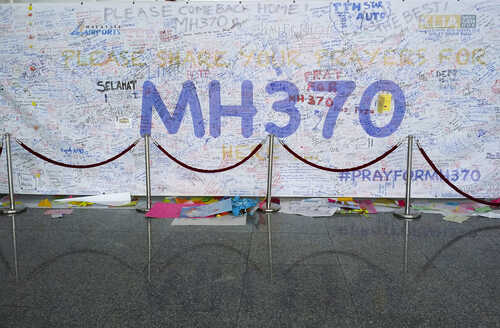
Nearly 12 years after Malaysia Airlines Flight 370 vanished without a trace, a private company is launching a high-stakes $70 million search using cutting-edge drone technology that could finally solve one of aviation’s most baffling mysteries.
Story Snapshot
- Ocean Infinity resumes MH370 search on Tuesday using advanced underwater drones capable of diving 20,000 feet
- Search area narrowed from 46,000 to 5,800 square miles using drift analysis and ocean current data
- Malaysia offers a $70 million “no-find, no fee” contract to the British-American robotics company
- Only 30 aircraft fragments have been found since 2014; no passenger or crew remains have been recovered from the 239 people aboard
Revolutionary Technology Deployed in Ocean Search
Ocean Infinity’s autonomous underwater vehicles represent a quantum leap in deep-sea exploration capabilities. These sophisticated drones operate independently for up to 100 hours before resurfacing, equipped with side-scan sonar that creates detailed 3D seafloor images.
The technology includes ultrasound imaging to penetrate sediment layers and magnetometers designed to detect metal debris from aircraft wreckage, providing unprecedented search precision in the vast Indian Ocean.
Resumption of the search for the wreckage of flight MH370: Starting today, the company Ocean Infinity will survey an area of 15,000 square kilometers for 55 days, more than 11 years after the plane's disappearance.
The marine robotics company Ocean Infinity will again scour the… pic.twitter.com/dYyoJDNOV6
— FL360aero (@fl360aero) December 30, 2025
Mystery Deepens Despite Extensive Investigation
Flight 370 departed Kuala Lumpur for Beijing on March 8, 2014, carrying passengers from 14 countries, including Americans. The aircraft’s transponder mysteriously switched off 40 minutes into the flight, erasing it from civilian radar.
Military tracking detected the Boeing 777 making an unexplained westward turn over the Malay Peninsula before disappearing into the Indian Ocean, leaving investigators with more questions than answers about the flight’s final moments.
The original search operation covered an area larger than Virginia, spanning over 46,000 square miles off western Australia’s coast. Advanced drift analysis, incorporating historical ocean current and wind data, has now focused on a more manageable 5,800-square-mile zone.
This scientific approach offers the best probability of locating the main wreckage that has eluded multiple international search efforts over the past decade.
Physical Evidence Provides Critical Clues
Since 2015, fewer than 30 confirmed aircraft fragments have washed ashore across Indian Ocean coastlines from Madagascar to Mauritius. The first discovery occurred on La Réunion island, where a beach cleaner found a flaperon wing component.
Subsequent recoveries included landing gear doors, wing flaps, and fuselage panels from critical structural joints, confirming the aircraft’s catastrophic breakup somewhere in the vast ocean expanse.
Ocean Infinity’s $70 million contract operates on a results-only basis, meaning Malaysia pays nothing unless the company successfully locates the missing aircraft.
This incentive-based agreement demonstrates both the financial stakes involved and the confidence in advanced robotic technology. Success would not only provide closure for families but establish Ocean Infinity as the company that solved aviation’s greatest mystery since Amelia Earhart’s 1937 disappearance over the Pacific.