
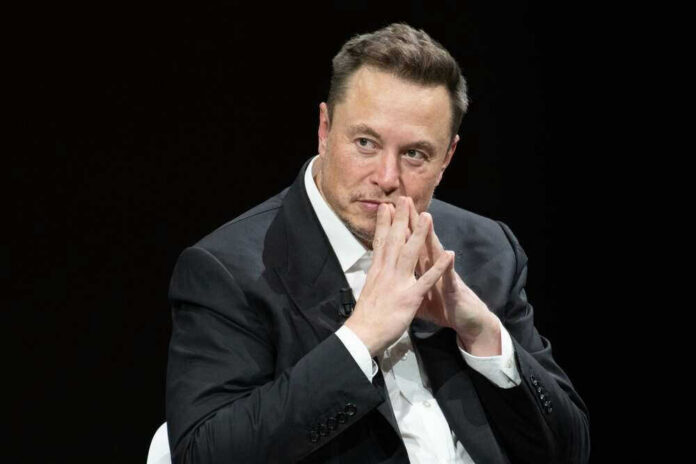
Elon Musk stood before a room of Wall Street elites and said five words that instantly became the week’s biggest political headline: “I’m not MAGA.”
Quick Take
- Musk told New York Times editor Andrew Ross Sorkin he is “not MAGA” at the DealBook Summit on November 18.
- He said he avoids “blind adherence” to Republican Party policy, despite spending hundreds of millions on GOP candidates.
- Musk called his midterm spending “pretty foolish” after Republicans underperformed at the polls.
- Critics point out he once called himself “dark gothic MAGA” and wore MAGA hats at Trump rallies.
- His America PAC and related groups put roughly $446 million into Republican-aligned races in the 2026 cycle alone.
The Moment Musk Drew a Line Between Himself and the Movement
At the DealBook Summit, interviewer Andrew Ross Sorkin pressed Musk on his political identity. Musk answered plainly. He said he isn’t even sure what MAGA means anymore. He added that he refuses “blind adherence to a set of policies by the Republican Party,” framing himself as someone who backs specific candidates case by case rather than following a party line.
Regret Follows the Receipts
Musk didn’t stop at identity. He admitted feeling “pretty foolish” about how much money he poured into the 2026 midterms, after Republican candidates he backed came up short at the ballot box. That admission turned a philosophical statement about labels into something closer to a confession about wasted cash and misjudged political bets.
Elon Musk Says He’s ‘Not MAGA,’ Calls Himself ‘Quite Moderate’ pic.twitter.com/Wkdkj2eGNc
— New York Post (@nypost) November 19, 2026
His stated goal, he explained, was never a total Republican sweep. He said he wanted government split enough that no single party held complete control of Congress and the White House at once. A one-party supermajority, not Democratic wins themselves, was the outcome he said he feared most.
The Price Tag Doesn’t Match the Pitch
Numbers tell a different story than the rationale. Reports tracking Federal Election Commission filings put Musk’s 2026 election spending near $446 million, almost all of it funneled into Republican-aligned super PACs and candidates. That scale of one-sided giving makes the “balance of power” explanation harder to sell to voters watching where the checks actually landed.
From Dark Gothic MAGA to Not MAGA
Musk’s new framing collides with his own words from 2024. At a Trump rally that year, he told supporters, “As you can see, I am not just MAGA, I’m dark MAGA,” while standing on stage in a MAGA hat. Nothing in his recent remarks explains that reversal, leaving reporters and voters to guess whether the earlier statement was theater, strategy, or a belief that genuinely changed.
One Texas Race Shows the Real Stakes
America PAC’s spending in Texas illustrates the gap between Musk’s words and his wallet. The group backed Attorney General Ken Paxton’s Senate bid with millions, then spent dramatically more attacking his Democratic rival, who won the race anyway. That pattern, repeated across multiple contests, undercuts the idea that Musk’s giving was neutral or purely aimed at preventing one-party rule.
Republican political consultants so badly mismanaged the nearly $500 million Elon Musk contributed that their self-serving incompetence left him disillusioned and led him to publicly distance himself from MAGA.
Nice work, you cold, greedy opportunists.
— Bella (@stockbella) November 22, 2026
Whatever Musk’s intent, the practical effect built Republican campaign infrastructure at a scale few individual donors ever reach. Separating personal identity from political consequence is a fair philosophical distinction. But voters judge donors by where the money actually goes, not by the label a donor chooses for himself after the votes are counted.
Megadonors and the Bigger Dark-Money Story
Musk’s reversal lands inside a much larger shift in American political funding. Dark-money groups among the nation’s 40 biggest political spenders gave roughly $699 million by October 2026, thirteen times their 2014 total, now making up 29 percent of giving at that level. Musk draws the headlines, but the structural trend toward hidden, massive spending reaches far beyond any one donor’s rebrand.
Conservative voters who value limited government and transparent elections should want clarity here, not spin. If Musk genuinely rejects blind partisanship, future giving records will show it plainly. Until then, the receipts, not the rebrand, will keep defining how Americans understand his politics.
Sources:
foxbusiness.com, edition.cnn.com, news.meaww.com, thejournal.ie, votelog.org, brennancenter.org