
President Trump put a public price on catching fraud: a 1% reward for tips that lead to recovered taxpayer money.
Story Snapshot
- Trump announced a fraud whistleblower reward, describing a 1% commission on recoveries.
- The program targets fraud against taxpayers and federally funded programs, with tips via fraud.gov.
- All Americans, including journalists, can submit tips, subject to outlet approval for reporters.
- The White House described a $25 million program administered through the Justice Department.
What Trump Announced And Who Can Claim A Reward
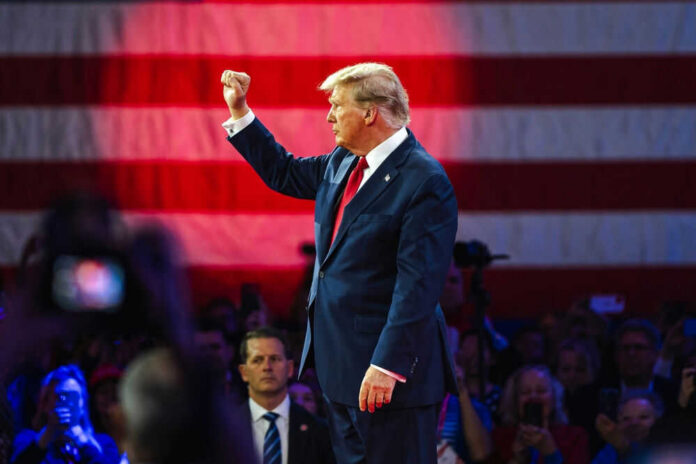
Trump told Americans they could earn a 1% reward if their tip uncovers and recovers stolen taxpayer money, naming examples like $1 billion or $10 billion cases. He said ordinary citizens and “independent journalists” can report fraud against the federal government. He stated that reporters may take part if their outlets approve. The plan directs tips through fraud.gov and points to the Department of Justice as the administrator, according to White House descriptions and coverage.
The stated target is broad: schemes that drain federal programs or cheat taxpayers. Trump framed the plan as a way to turn the public into a force-multiplier for enforcement. He said he would be “very generous” in deciding who earns payment. Coverage aligns on that point and notes he described himself as the final decision-maker for awards. That approach places the presidency at the center of claims, rather than a court or an agency board review.
First Public Payout And The Money Behind The Program
At the announcement, conservative videographer Nick Shirley received a $10,000 check described as the program’s first payout. That public moment signaled the plan is more than a press release, though it did not itself show the enforcement file behind the figure. News reports also said the initiative is a $25 million program, with the Department of Justice handling administration, and the official reporting channel being fraud.gov.
Published descriptions conflict on the reward size and trigger. Trump spoke of an uncapped 1% commission on money recovered. Other materials referenced awards up to $30,000 and linked eligibility to criminal charges, convictions, or major enforcement actions. Trump later suggested criminal charges are not required if money is recovered. These are not small details; they shape how and when a tipster gets paid.
How This Fits America’s Whistleblower Tradition
Paying for tips is not new. The False Claims Act lets private citizens sue for fraud on the government and share in recoveries. From 1987 to 2005, cases filed by whistleblowers produced about $9.6 billion of the more than $15 billion recovered in those suits, a major share of the total. The Government Accountability Office reported the median recovery in such cases was about $784,597, and the median award to the whistleblower was around $123,885.
Other federal programs also rely on clear rules. The Securities and Exchange Commission’s whistleblower system pays eligible tipsters a set share when their information leads to a successful enforcement action over minimum thresholds. Congress set guardrails for eligibility, process, and awards. That structure builds credibility because people know the steps, the standards, and the share before they report.
Why The Design Details Will Decide Outcomes
Conservative values press for tough fraud enforcement with clear rules, equal treatment, and respect for taxpayers. A 1% bounty can sharpen incentives and crowdsource leads. But the math and the process must be squared. A stated $25 million program cannot carry billion-dollar commissions without a separate legal and budget bridge. The government also needs firm standards on what counts as “recovered,” how to credit multiple tipsters, and how to manage claims from reporters with prior publication.
BREAKING: 🇺🇸 President Trump unveils a $25 million Fraud Whistleblower Incentive Program that pays tipsters a 1% commission on fraud they help uncover.
If you report $1 billion worth of fraud, you get $10 million.
Trump says there's no limit on the payout. pic.twitter.com/KRkK4mGOro
— Futures Max (@FuturesMax) October 21, 2026
Trump’s pledge aims straight at waste, fraud, and abuse, and it invites citizens to help catch it. The strongest version of this program will do three things fast. First, publish the full rules of the road: payment formula, eligibility triggers, and appeals. Second, anchor awards to collected proceeds, not estimates. Third, keep decisions in a transparent channel with agency review. Do that, and a 1% promise can become a durable tool that pays taxpayers first and tipsters next.
Sources:
cbsnews.com, inquirer.com, washingtonexaminer.com, thegatewaypundit.com, usatoday.com, dailywire.com