
The most revealing fact is this: the Supreme Court keeps the door open for President Trump’s mail-ballot rules while refusing to bless them, and the clock is running.
Story Snapshot
- The Justice Department asked the Supreme Court to let nationwide mail-ballot limits take effect before more ballots go out.
- North Carolina already started mailing ballots, with more states close behind, fueling the urgency claim.
- The Court granted limited relief in August but has not ruled on legality.
- Opponents say the order is unconstitutional and risks disenfranchising voters, and a judge flagged thin Postal Service proof.
The Legal Play: Speed, Uniformity, and Executive Control
The administration filed an emergency request urging the Supreme Court to greenlight mail-ballot restrictions nationwide before more ballots ship.
The filing argues the executive branch must manage its agencies, including the Postal Service, and that a single standard reduces chaos.
The Justice Department framed the rule as compliance guidance, not an experiment. It claimed that fast, uniform enforcement would cut confusion and show that following the new standard is not optional.
Solicitor General John Sauer leaned on the calendar. He told the Court that ballots were already going out in North Carolina, and more states would mail soon.
He named Alabama’s September 9 start and at least five more states the week of September 13. That timeline is not spin; it is a logistics fact the Court understands. The message is clear: act now or the window shuts, and election officials face two sets of rules at once.
BREAKING: The Trump administration makes another appeal to the Supreme Court to allow mail ballot restrictions. https://t.co/j7mizn0PWs
— The Associated Press (@AP) September 6, 2026
What the Rules Would Actually Do
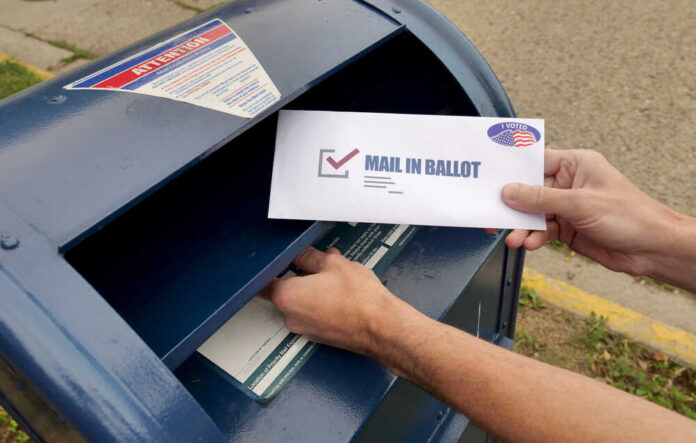
Reports describe a federal list of eligible voters and envelope standards designed to verify that ballots are delivered and handled as the rule requires. The Postal Service would be directed to deliver ballots only to the people on that federal list.
These design choices aim to reduce errors and stop ballots from reaching ineligible names. That is the plain theory the administration advances: tighten the pipe, track the mail, raise trust in chain of custody.
The Court’s August action matters. Justices lifted a blocking order and gave the administration a narrow, early win. That ruling did not resolve the merits. It only removed one roadblock while litigation continues.
The signal is mixed but real: the Court will not freeze every lever the executive pulls in this space, yet it also will not endorse the legal core until it sees more.
The Holes Critics Point To
A federal judge said the government lacked sworn evidence from the Postal Service to prove the system was ready. The judge’s concern went to brass tacks: show how the scanning, routing, and portal checks actually work, with error rates and timelines.
Reuters reported the judge saw no concrete proof of fraud that would demand the rule. That gap fuels the charge that the plan risks voter confusion more than it stops abuse.
Voting-rights groups and states argue the order crosses constitutional lines. They say the president cannot set mail-voting eligibility or force states into a federal portal. They also warn that last-minute federal requirements will burden voters and trigger mistakes.
Their claims won interim rulings in some courts, including a finding that disenfranchisement was plausibly likely and imminent. These arguments frame the order as executive overreach into state-run elections.
Order, Evidence, and the Purcell Clock
Ccommon sense asks for two things at once: clear rules well before voting starts, and proof that new rules solve a real problem at acceptable cost. The administration advances order and uniformity, which are sound aims.
Yet judges want operational receipts from the Postal Service and a stronger record of fraud or error the rule would prevent. Without that, claims of chaos cut both ways this close to an election.
Trump administration petitions Supreme Court to allow mail ballot restrictions | https://t.co/4YCwQtyBIB https://t.co/hdyLoMJcPy
— Woody (@dw2025rmeat) September 6, 2026
The Supreme Court’s pattern fits the well-known election-timing rule: avoid late changes that confuse voters and officials. Here, the twist is who is changing what.
The White House says it is restoring federal discipline over federal agencies. Opponents say it is re-writing state election law by proxy.
The Court’s partial relief shows some sympathy to executive management, but its refusal to reach the merits keeps pressure on the administration to show readiness and necessity with specifics.
What To Watch Next
Three facts will decide the endgame. First, whether the administration files sworn, technical declarations from Postal Service officials that show tested systems, realistic timelines, and low error rates.
Second, whether opponents produce concrete evidence that the rule would block lawful ballots from eligible voters at scale. Third, whether mailing calendars force the Court to freeze the status quo again. Courts reward preparation; they punish experiments on a deadline.
Sources:
reuters.com, apnews.com, aclum.org, politico.com, aclu.org, aljazeera.com