
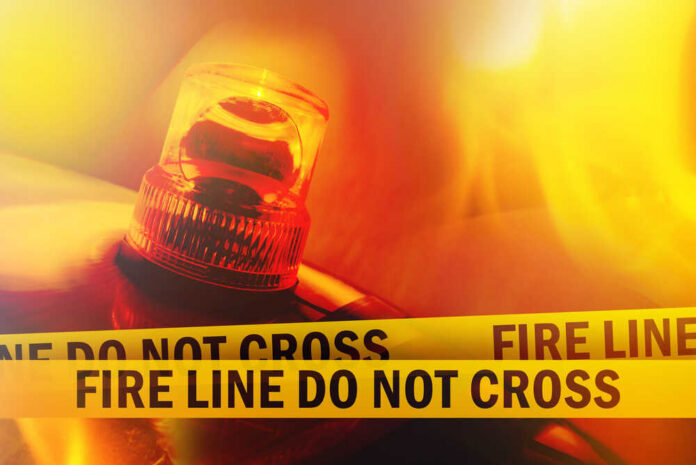
Two pilots died after their firefighting helicopter crashed on the edge of Utah’s Widemouth 2 Fire, and the first confirmed facts point to a dangerous rescue scene before they point to a cause.
Quick Take
- The crash involved a Sikorsky S-64 Skycrane helicopter working wildfire suppression near Richfield, Utah.
- Officials later confirmed that two crew members or pilots on board died.
- Fire conditions and steep terrain kept rescuers away from the wreckage at first.
- The crash is now under investigation, and the cause has not been released.
What Officials Say Happened
Reports from federal, state, and local sources describe a helicopter crash during firefighting work in central Utah. The aircraft went down near the Three Creeks Reservoir area southwest of Richfield, close to the southeast edge of the Widemouth 2 Fire.
The National Interagency Fire Center later confirmed that the two people aboard were “fatally injured,” which turned early concern into a confirmed tragedy.
Officials provided updates on the helicopter crash that killed two firefighters assigned to the Widemouth 2 Fire, confirming that they were able to recover the victims from the crash site on Saturday.
More details: https://t.co/d5siGdoo4v pic.twitter.com/gdSWURXva7
— ABC4 News (@abc4utah) August 9, 2026
The key detail is not just that the aircraft crashed. It crashed while doing the kind of work that asks the most from both machine and crew: low-level flying, heavy lifting, smoke, heat, and fast-changing terrain.
The firefighting mission was part of a wider effort on a fire that had already grown large and dangerous. That is why the crash drew such fast attention from the Federal Aviation Administration, the National Transportation Safety Board, and local sheriff’s officials.
The Human Cost Came Into Focus Slowly
At first, officials could not safely reach the site. The fire had started a new blaze after impact, and the rugged ground made access slow and risky. That delay mattered because it left families, crews, and the public waiting for confirmation instead of answers. By Saturday, responders reached the wreckage, recovered the bodies, and confirmed that both people aboard had died.
The reports do not name the pilots, but they do identify the company behind the helicopter as Helicopter Transport Services, working under contract for the United States Forest Service. That detail gives the crash a sharper edge.
This was not a private sightseeing flight or a routine commute. It was an aircraft and crew in the middle of an active wildfire response, trying to protect homes, land, and the firefighters on the ground.
Why the Story Moved So Fast
Wildfire aviation crashes often create two stories at once. The first story is immediate and plain: an aircraft went down, people died, and rescue crews were blocked by fire conditions. The second story takes much longer. Investigators need access, wreckage, and time.
In this case, the National Transportation Safety Board was already heading to the area, but officials said it could take a year or more to determine why the crash happened.
Two helicopter pilots were killed when their Sikorsky Skycrane crashed while battling a wildfire in Utah’s Fishlake National Forest, officials confirmed Saturday. https://t.co/L4kJsOa3TS
— FOX 4 NEWS (@FOX4) August 10, 2026
That long wait is where public patience gets tested. People want a clean explanation on day one, but the scene itself often resists one. Smoke, steep slopes, and active flames can hide crucial evidence. The result is a news cycle built around confirmed facts first and technical answers much later.
Here, the confirmed facts are strong enough to stand on their own: a firefighting helicopter crashed, two crew members died, and investigators are now sorting out how it happened.
What This Means in Plain Terms
This crash shows how thin the line can be between emergency response and emergency itself. The same helicopter that helps slow a wildfire can become part of the disaster when conditions turn bad. That is the hard reality of aerial firefighting. It demands precision, nerve, and luck, and when one of those pieces fails, the consequences are immediate and final.
The public record so far supports a clear, narrow account. A Sikorsky Skycrane crashed while fighting the Widemouth 2 Fire. Two people aboard died. Rescue teams were delayed by fire and terrain. The cause remains open. For now, that is the story officials have actually confirmed, and it is already grim enough without adding guesses to it.
Sources:
apnews.com, aljazeera.com, theguardian.com, ndtv.com, kutv.com, justthenews.com