
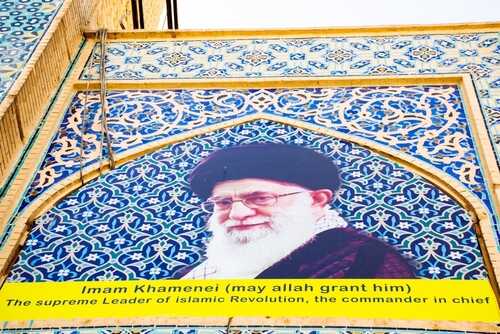
CIA “high-fidelity” intelligence reportedly helped Israel strike Iran’s supreme leader at the exact moment he thought he was safest—raising the stakes for U.S. troops, energy markets, and the wider Middle East.
Story Snapshot
- Reports say the CIA tracked Ayatollah Ali Khamenei’s movements for months and shared his location with Israel ahead of a Saturday-morning strike in Tehran.
- Israeli planners reportedly shifted from a nighttime plan to a daytime missile strike after receiving last-minute confirmation of a high-level meeting.
- Iran’s leadership was hit at the top, with reports that senior IRGC and military council figures were also killed.
- Iran retaliated with missiles and drones against Israel and strikes on U.S. Gulf bases, with reported U.S. casualties.
How U.S. Intelligence Sharing Reportedly Changed the Strike Timing
U.S. and Israeli officials described an operation in which CIA tracking pinpointed Khamenei’s presence near a national security meeting, and the information was quickly shared with Israel.
Reports say that the update shifted an earlier plan from a nighttime action to a Saturday-morning daylight strike using long-range missiles. The timeline described Israeli aircraft launching around 6:00 a.m. Israel time, with impacts reported in Tehran before 10:00 a.m.
Public reporting credits the precision to “high-fidelity” intelligence built over months, with monitoring that reportedly intensified after last year’s 12-day war exposed Iranian vulnerabilities.
That type of cooperation is not new, but these accounts portray a particularly tight operational handoff—intelligence driving a real-time decision on when to hit. Key technical details, including the missile types used and full battle damage assessments, were not publicly disclosed.
The CIA had tracked Khamenei's location for several months before the strike that killed him, a person familiar with the matter tells CBS News. https://t.co/2CcDfcLa7a
— CBS Philadelphia (@CBSPhiladelphia) March 1, 2026
Decapitation Strike Claims and What Can (and Can’t) Be Verified
Multiple outlets reported that Khamenei, 86, was killed alongside senior regime figures, including IRGC commander Mohammad Pakpour and military council head Admiral Ali Shamkhani.
Reports also claim follow-on strikes targeted Iranian intelligence sites and thinned senior ranks, with at least one top officer escaping. While several sources aligned on the broad outline—meeting-based targeting and leadership losses—some specifics varied, including the precise time of impact.
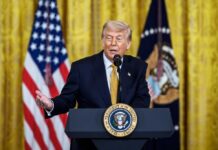
Statements also say President Donald Trump and Israeli Prime Minister Benjamin Netanyahu viewed an image of Khamenei’s body after the strike. That claim, while widely repeated in the cited coverage, is not independently verified in the research provided, and no authenticated image was included.
Iran’s Retaliation and the Immediate Cost to Americans
Reporting indicates Iran responded with missile and drone attacks on Israel that caused civilian casualties and injuries, and also struck U.S. Gulf bases, with three U.S. troops reported killed and five wounded.
Iranian leaders signaled both continuity and reprisal: President Masoud Pezeshkian announced a temporary leadership council, while other officials publicly vowed consequences for those responsible. Air travel disruptions and elevated regional alert levels followed.
Strategic Fallout: Security, Energy, and the Constitution-First Lens at Home
Strikes of this magnitude carry predictable second-order risks: wider conflict, pressure on the Strait of Hormuz, and volatility in oil markets tied to global shipping routes. The research notes the sensitivity because a significant share of world trade moves through Hormuz.
It also highlights concerns about Iran’s nuclear rebuilding, including advanced centrifuges and restricted inspectors, which were cited as part of the rising tension backdrop in recent weeks.
For Americans focused on constitutional government and limited executive power, the key question is less about political slogans and more about accountability: what commitments follow, how force protection is strengthened, and what Congress and the public are told about the scope of U.S. involvement.
The research depicts deep U.S.-Israel coordination and real operational consequences, including reported U.S. casualties—facts that make transparency and clearly defined objectives essential, regardless of party.
CIA Shared Khamenei Location for Israeli Strike https://t.co/GOjp3NhOBL #CIA #Khamenei #Israel #Iran #Tehran
— Casey (@ctls4) March 1, 2026
Iran’s succession process was described as imminent, with officials suggesting a quick selection window. That creates uncertainty: a power vacuum can either fracture a regime or harden it, depending on who consolidates control.
What is clear from the reporting is that the U.S. is now operating in an escalated environment in which American forces are already paying a price, and in which deterrence, intelligence discipline, and measured decision-making matter more than wishful thinking.
Sources:
Revealed: CIA report pinpointing Khameini location triggered launch of campaign against Iran regime
https://www.ynetnews.com/article/h131qlgtbe
How did the C.I.A. manage to locate and eliminate the supreme leader?
https://english.aawsat.com/node/5246120
CIA intel guided strikes killed Khamenei