

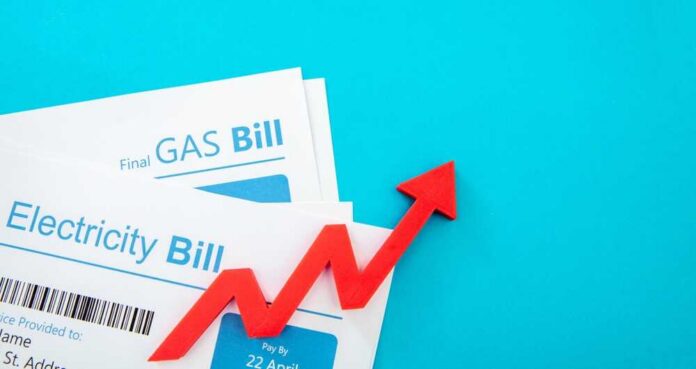
American families are getting hammered by electricity bills that are soaring twice as fast as overall inflation, while Big Tech’s insatiable data centers suck up power with no relief in sight for hardworking households already struggling under Biden-era economic wreckage.
Story Snapshot
- Residential electricity prices jumped 5.5% over the past year—double the 2.75% general inflation rate—pushing average monthly bills to $156, up 30% since 2021
- Energy Information Administration forecasts continued price surges through 2026, driven by power-hungry AI data centers and aging infrastructure, not renewable energy
- Utilities are passing over $100 billion in grid upgrade costs directly to consumers through rate hikes, while tech giants negotiate favorable power deals that leave families footing the bill
- Low-income households face the greatest burden as federal aid programs vanish, shifting responsibility to cash-strapped states and pushing some families toward energy poverty
Power Bills Skyrocket Beyond Inflation Rates
Residential electricity prices climbed from 15.92 cents per kilowatt-hour in January 2025 to 17.47 cents by May 2025, marking a 9.7% increase in just five months.
The Bureau of Labor Statistics reports that electricity inflation was 5.5% over the last 12 months, approximately double the overall inflation rate of 2.75%.
This represents a sharp departure from historical patterns, in which electricity prices rose at an annual rate of 1.67% from 1913 to 2026, well below the overall Consumer Price Index average of 3.14%.
Average household bills now reach $156 per month, a painful 30% increase from the $121 average in 2021.
Electricity prices are rising by double the rate of inflation. Data center demand means no relief ahead https://t.co/s49r7rsgnV
— CNBC (@CNBC) February 12, 2026
Data Centers Drain Grid While Families Pay Premium
The explosive growth of artificial intelligence and cloud computing is fundamentally reshaping America’s electricity landscape.
Power-intensive data centers that train AI models and run server farms are driving unprecedented demand on electrical grids already strained by aging infrastructure and electric vehicle adoption.
The Energy Information Administration projects retail electricity prices will rise 13% in 2025 and 18% in 2026 compared to 2022 baseline levels, significantly outpacing projected Consumer Price Index increases of 11% and 14% over the same period.
Tech companies negotiate specialized power purchase agreements that give them preferential access, effectively sidelining residential customers who absorb costs through utility rate increases approved by state Public Utility Commissions.
Infrastructure Costs Transferred to Struggling Households
Utilities are investing over $100 billion in transmission upgrades and grid modernization projects, with costs passed directly to consumers through rate hikes approved by state regulators.
Natural disasters, including hurricanes and wildfires, have damaged electrical infrastructure, requiring expensive repairs funded through customer bills. Import tariffs on electrical equipment and materials have raised construction costs that utilities recover through rate increases.
Regional variations show the heaviest burdens falling on the Middle Atlantic, New England, and Pacific states, while areas with substantial renewable energy capacity saw some price relief. This cost structure fundamentally prioritizes corporate infrastructure expansion over household affordability.
Economic Hardship Deepens for Working Families
Households now face an additional $540 annually in electricity costs compared to recent years, compounding financial strain from 13.8% increases in natural gas prices.
The Trump administration has wisely eliminated wasteful federal energy assistance programs and correctly shifted responsibility to states, but this transition leaves some communities vulnerable during the adjustment period.
MIT economist Christopher Knittel notes post-pandemic electricity price acceleration runs twice the general inflation rate, eroding disposable income and potentially slowing electric vehicle adoption despite environmental benefits.
Low-income families in high-cost regions face genuine risks of energy poverty as bills consume a larger share of household budgets, while Public Utility Commissions face mounting pressure to balance utility investment needs with consumer protection concerns in an increasingly contentious political environment.
The data reveal a fundamental market distortion where technological advancement benefits primarily serve corporate interests while everyday Americans shoulder infrastructure costs.
State regulators must scrutinize utility spending and ensure rate structures don’t unfairly burden residential customers to subsidize industrial and commercial operations.
As the Trump administration works to restore economic common sense, addressing this electricity crisis requires balancing grid modernization needs with protection for families already stretched thin by years of inflationary policies and government overreach under previous leadership.
Sources:
Electricity Price Inflation Historical Data
Electricity Price Increases Are Outpacing Inflation
U.S. Energy Information Administration: Retail Electricity Prices Forecast
Why Are Electricity Prices High in 2026
What’s Driving U.S. Electricity Prices
Maryland Rising and Falling Electricity Rates
Empire Center Energy Data Bulletin January 2026
United States Energy Inflation Data