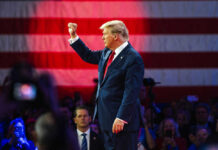
President Trump’s ambitious plan to acquire Greenland creates geopolitical waves and sparks economic shifts.
Story Highlights
Trump’s plan to acquire Greenland faces international scrutiny.
NATO allies express concern over potential geopolitical instability.
Tariff threats from the U.S. heighten tensions with Europe.
Investors react to the uncertainty by turning to safe-haven assets.
Geopolitical Ambitions in the Arctic
President Trump’s renewed interest in acquiring Greenland has reignited geopolitical tensions and strategic debates worldwide. The Arctic island, rich in minerals and resources, presents a unique opportunity for expanding U.S. influence in the region. However, this move has met with resistance from Denmark and the Greenlandic government, who view their sovereignty as non-negotiable. The Trump administration’s determination to push forward with this acquisition reflects a broader strategy to counteract Chinese and Russian interests in the Arctic.
Gold and silver surge to fresh highs as investors digest Trump's push for Greenland and flock to safer assets https://t.co/BR5pIDRDOd
Diplomatic efforts have been strained, as NATO allies express concern over the potential destabilization of the region. The administration’s approach includes a series of economic incentives and strategic partnerships aimed at swaying Greenland’s leadership. Despite these efforts, the geopolitical implications of such an acquisition have led to widespread debate among international leaders, questioning the long-term impact on NATO cohesion and U.S.-European relations.
Economic Ramifications and Investor Reactions
The uncertainty surrounding the Greenland acquisition has had immediate effects on global markets. In response to potential tariff threats and geopolitical instability, investors are flocking to safe-haven assets like gold and silver, driving their prices to fresh highs. This move underscores a broader trend of market volatility in reaction to geopolitical tensions. Financial markets have responded with caution, as traders assess the long-term implications of such a significant geopolitical shift.
The Trump administration has utilized tariff threats as a bargaining chip, aiming to pressure European allies into supporting the Greenland initiative. This tactic has heightened tensions, with European markets experiencing increased volatility. The potential for a trade war looms, as both sides brace for economic repercussions. Political analysts suggest that these developments could lead to a reevaluation of trade agreements and alliances within NATO.
Strategic Implications and Future Outlook
Strategically, the acquisition of Greenland would enhance U.S. military and economic presence in the Arctic, an area of growing importance due to its untapped resources and strategic location. The administration views this move as an essential step in countering adversarial influences and securing American interests in the region. However, the challenges of navigating diplomatic relations and managing international perceptions remain significant obstacles.
As the situation evolves, the world watches closely. The potential for a historic shift in geopolitical dynamics looms large, with far-reaching consequences for global security and economic stability. The Trump administration’s next steps will be critical in determining the future of U.S. foreign policy and its role on the world stage.