

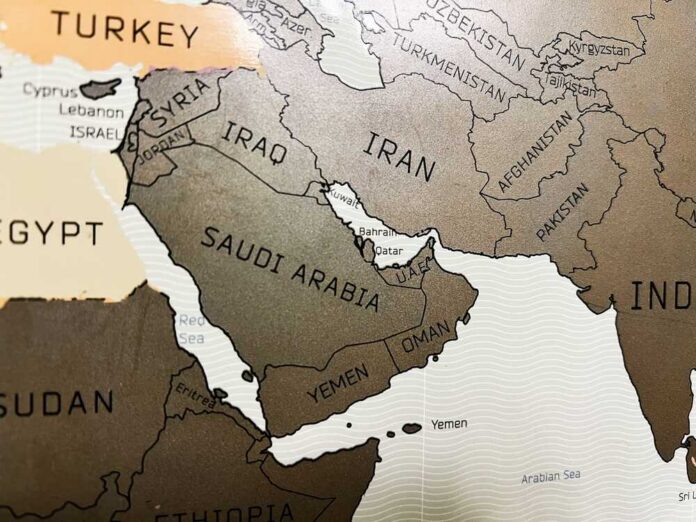
American families are paying 1970s-style energy crisis prices at the pump because the Iran war has destroyed over 40 critical Middle East energy facilities, threatening to keep fuel costs skyrocketing long after the bombs stop falling.
Story Snapshot
- Over 40 energy assets across nine Middle East countries were severely damaged by U.S.-Israeli military operations against Iran, causing unprecedented supply disruptions
- Strait of Hormuz nearly closed, blocking 20 million barrels per day—20% of global oil and gas transit—driving prices higher than 1970s oil shocks combined
- IEA released a record 400 million barrels from emergency reserves, but warns infrastructure damage will prolong price pain even after fighting ends
- Trump’s ultimatum to Iran threatens more escalation, while American drivers face energy costs resembling the worst economic crises in modern history
Trump’s War Creates Energy Nightmare Americans Were Promised to Avoid
International Energy Agency Executive Director Fatih Birol confirmed on March 23 that more than 40 oil fields, refineries, and pipelines across nine Middle East nations have suffered severe or very severe damage from the Iran conflict that began February 28.
Speaking at Australia’s National Press Club in Canberra, Birol warned the physical destruction to energy infrastructure will extend supply disruptions and elevated prices long beyond any ceasefire. This represents a betrayal of Trump’s 2024 campaign pledge to keep America out of new wars, leaving hardworking families to absorb energy costs that rival the economic devastation of the 1970s Arab oil embargoes.
More than 40 Middle East energy assets ‘severely damaged,’ IEA chief says https://t.co/s1wFWM4C1u
— CNBC (@CNBC) March 23, 2026
Strait of Hormuz Blockade Hits Americans Harder Than Any Foreign Policy Win
The Strait of Hormuz, a chokepoint handling 20 million barrels of oil daily, has been effectively shut down since early March following U.S.-Israeli strikes that killed over 1,300 people, including Iran’s Supreme Leader Ali Khamenei. Iran retaliated by blocking the waterway and launching drone and missile attacks on Jordan, Iraq, and Gulf states hosting American military assets.
The result is an 11 million barrel-per-day oil loss and 140 billion cubic meters of natural gas disruption—exceeding the combined impact of two 1970s oil crises and double the 2022 Russia-Ukraine gas shock. Conservatives who supported Trump to end globalist regime-change adventures now watch their paychecks evaporate at gas stations.
Emergency Reserve Releases Offer Temporary Band-Aid, Not Solution
The IEA coordinated a record 400 million barrel release from member nations’ strategic petroleum reserves in early March, with the United States contributing 172 million barrels and Japan adding 80 million. Birol stated reserves could flow further if disruptions persist, prioritizing energy-starved Asian economies heavily reliant on Middle Eastern crude.
Yet he emphasized the only real solution is reopening the Strait of Hormuz, as reserve stockpiles merely delay the inevitable economic pain.
The agency also proposed demand-reduction measures for energy importers and criticized China for curbing fuel exports to protect domestic supplies—a nationalist move that ironically mirrors the America First principles Trump once championed before dragging the nation into another Middle East quagmire.
Infrastructure Damage Guarantees Long-Term Pain for American Consumers
Birol’s assessment reveals the war’s toll extends beyond oil and gas to petrochemicals, fertilizers, sulfur, and helium supply chains, threatening industries critical to American manufacturing and agriculture.
The damaged assets span refineries, pipelines, and production facilities across the conflict zone, requiring months or years of repairs that will sustain price volatility regardless of diplomatic outcomes.
On the same day as Birol’s speech, Israel launched fresh attacks on Tehran while President Trump issued a 48-hour ultimatum demanding Iran reopen the Strait or face strikes obliterating Iranian power plants. Iran vowed retaliation against U.S. and Israeli energy infrastructure, signaling escalation rather than resolution.
This crisis exposes the core contradiction of Trump’s second term: MAGA voters elected a president to prioritize domestic prosperity and avoid costly foreign entanglements, yet find themselves funding another endless war that enriches defense contractors while impoverishing Main Street.
The parallels to 1970s stagflation—recession combined with runaway inflation—are undeniable, as energy costs cascade through every sector from groceries to heating bills.
Birol’s warning that no country enjoys immunity from this “major, major threat” to the global economy rings hollow for Americans who believed their votes in 2024 would spare them from exactly this outcome. Limited government and fiscal responsibility cannot coexist with trillion-dollar military adventures that destroy the energy infrastructure American families depend on to survive.
Sources:
Over 40 Middle East energy assets ‘severely damaged,’ IEA says – Business Times
Global economy under major threat from Strait of Hormuz crisis, IEA chief – NBC Right Now
Global economy faces major threat amid worsening energy crisis: IEA chief – Tribune India
IEA Head Says Global Economy Faces ‘Major, Major Threat’ from Iran War – Asharq Al-Awsat